


Hand Sanding
Hand Sanding Pads & Blocks for Wood
Professional hand sanding tools designed for profiles, contours, detail work, and any surface a power sander cannot reach are ideal for woodworkers, painters, and finishers.
Precision Where Power Sanders Can’t Go
Hand sanding is still necessary, even in stores with full-power sanding equipment. A machine cannot mimic the direct control needed for profiles, curved edges, inner corners, and precise work. The hand sanding tools from SurfPrep are designed with the same abrasive grade as the power sanding range and are sized for hand-controlled operation, making them ideal for these kinds of scenarios.
For each operation, SurfPrep's foam abrasives usually reduce hand sanding by 50-70%. These products are constructed to professional standards for the remaining tasks.
-


RAD Pads Pro
Regular price From $14.87 USDRegular price -


SurfFlex Foam Roll Hand Pads
Regular price From $59.97 USDRegular price -


SurfPrep Non-Woven Hand Pads
Regular price From $99.36 USDRegular price -


9" X 11" Sandpaper Sheets
Regular price From $12.99 USDRegular price$0.00 USDSale price From $12.99 USD -


Sanding Sponge Block (Color Coded)
Regular price From $3.99 USDRegular price -
Sale
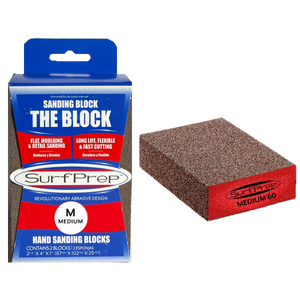

1" SurfPrep Block (Brown A/O) 2-Pack
Regular price $2.17 USDRegular price$3.10 USDSale Sale price $2.17 USD -
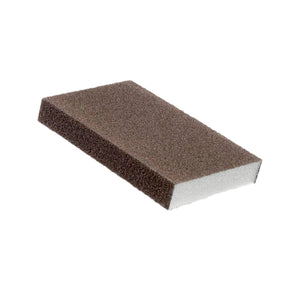
3 Sided 1/2 Sanding Block (Brown A/O)
Regular price $242.55 USDRegular price -
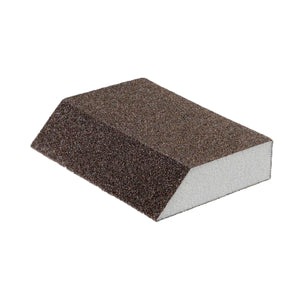
1" Single Angle Block (Brown A/O)
Regular price From $227.85 USDRegular price -
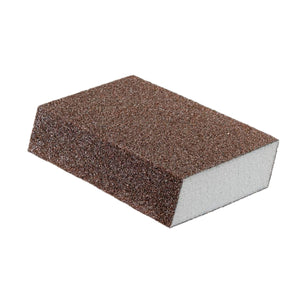
1" Dual Angle Block (Brown A/O)
Regular price From $226.75 USDRegular price -
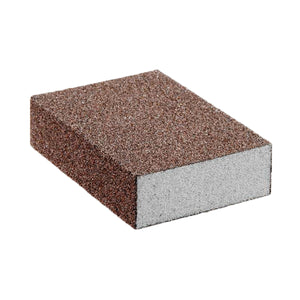
1" Standard Block (Brown A/O) *CONTRACTOR PACKS NOW AVAILABLE!*
Regular price From $27.07 USDRegular price -

2 Sided Soft Hand Pads (Red A/O) *CONTRACTOR PACKS NOW AVAILABLE!*
Regular price From $27.07 USDRegular price -

2 Sided Soft Hand Pads (Black A/O)
Regular price $239.25 USDRegular price -

2 Sided Soft Hand Pads (Brown A/O)
Regular price $239.25 USDRegular price


Choosing the Right Hand Sanding Product by Surface
| Surface Type | Recommended Product | Why It Works |
|---|---|---|
| Flat surfaces | 1" Standard Block, 9" × 11" Sheets | Rigid backing delivers a consistent, flat cut across the surface. |
| Profiled edges & mouldings | RAD Pads Pro, SurfFlex Foam Roll | Flexible foam conforms to the profile without rounding over fine details. |
| Inside corners & angles | Single Angle Block, Dual Angle Block, 3-Sided Block | Specially shaped backing reaches into tight corners and angles that flat blocks cannot. |
| Contoured surfaces | 2-Sided Soft Hand Pads, RAD Pads Pro | Soft foam backing follows curved surfaces without creating flat spots. |
| Between-coat scuffing | Non-Woven Hand Pads, Sanding Sponge Block | Provides light abrasion with minimal scratching before the next finish coat. |
| Detail & touch-up work | 1" SurfPrep Block, Sanding Sponge Block | Compact size offers precise control in tight spaces and delicate areas. |
How to Choose the Right Hand Sanding Tool
Rigid vs. Flexible
For straight edges, flat panels, and any surface where an even, controlled cut is required, a rigid hand sanding block provides the best performance. For curved surfaces, decorative profiles, and contoured areas, flexible foam pads and sanding blocks conform to the shape without damaging the profile.
Abrasive Type
Aluminum oxide abrasives, including Brown and Red A/O, are commonly used for stock removal and general surface preparation. Non-woven hand pads are ideal for between-coat sanding and light scuffing without creating aggressive scratch patterns. Standard 9" × 11" sanding sheets provide excellent versatility across multiple grit options for everyday finishing tasks.
Format and Size
Larger sanding blocks and pads are best suited for wide, flat surfaces because they cover more area with each pass. Smaller tools, such as the 1-inch sanding blocks, provide greater precision when working in corners, tight spaces, and detailed areas. The SurfFlex Foam Roll can be cut to any desired length, making it an excellent solution for sanding profiles of varying widths.
